
- Home
- /
- The DxRI Dispatch
- /
- Interviews
- /
- DBVW Architects: Bridging History...
DBVW Architects: Bridging History and Contemporary Design
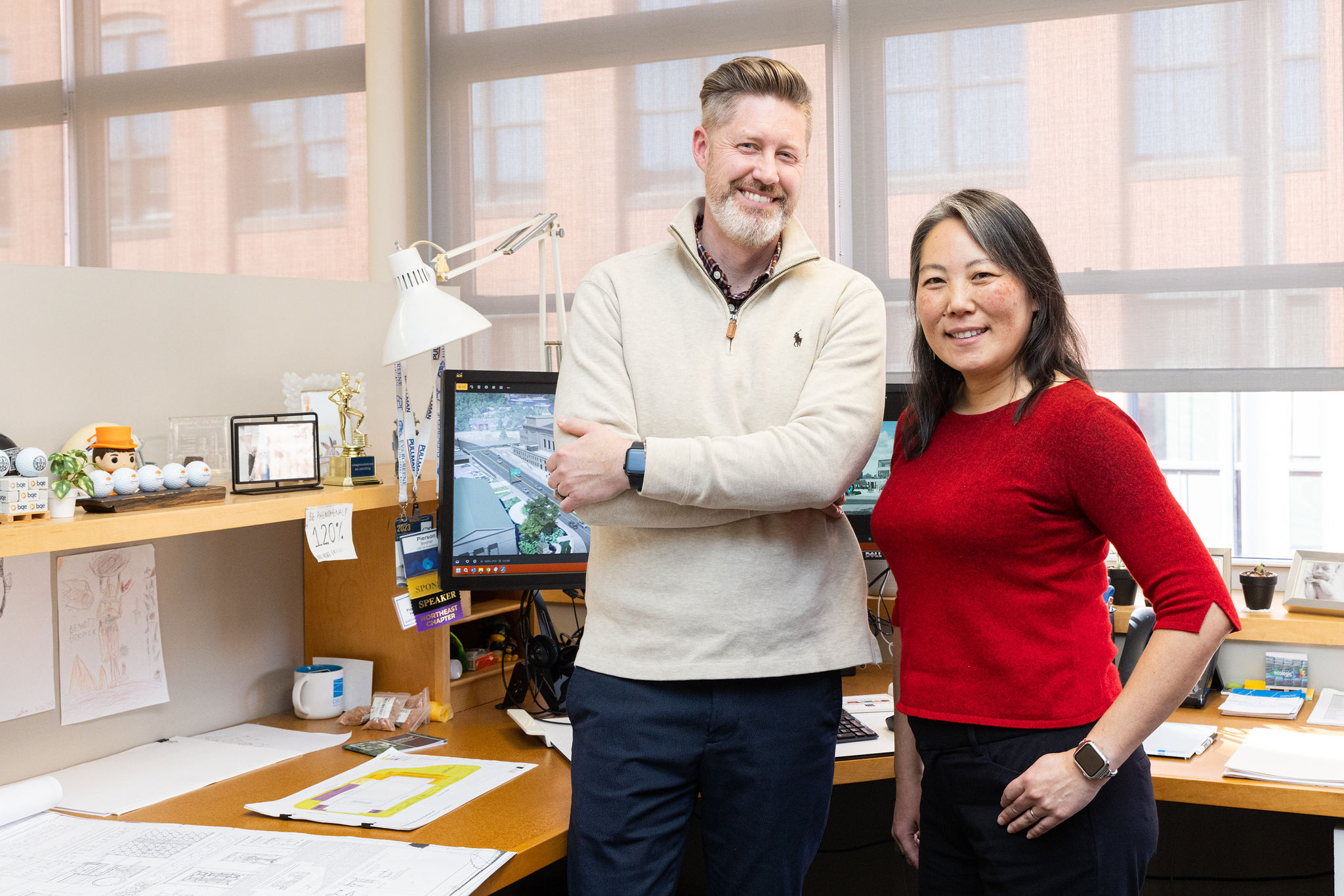
Photo by Rue Sakayama
DxRI recently sat down with Pierson W. Booher, AIA, and Tami Hughes of DBVW Architects to explore how their firm approaches the delicate balance between historic preservation and contemporary design. In the conversation, they shared insights into building community through thoughtful, context-driven architecture, adaptive reuse, and preservation projects that honor the past while meeting the needs of today’s users. From transforming historic theaters to revitalizing neighborhood housing, Pierson and Tami discussed how their team navigates complex challenges, collaborates with clients, and brings buildings, both old and new, back to life in ways that are meaningful, functional, and beautiful.
+++
DxRI : As architects, what core challenge drives your work across projects, whether new construction or adaptive reuse?
Tami Hughes : Often, clients come to us without fully knowing what they want or need, so a big part of our role is helping them articulate that. We spend a lot of time listening, asking questions, and clarifying priorities, especially when budgets are a real constraint, as they almost always are.
Beyond meeting client needs, we’re also deeply focused on how a project contributes to its surroundings. Much of our work has a direct impact on the broader community and physical environment, so we think carefully about how a building weaves into its neighborhood and gives something back. It’s about balancing the client’s goals with a responsibility to the people and places around the project, and making sure the outcome is thoughtful, respectful, and additive on all levels.
Pierson W. Booher : Building on that, a consistent thread in our work is responsiveness to context. We practice in an inherently historic region, the birthplace of the Industrial Revolution and, in many ways, of America itself. The existing building stock here presents unique design challenges, but it also offers a tremendous source of inspiration.
No matter the client or project type, our goal is to design in a way that’s deeply informed by place. Our practice spans a wide range of work, from K–12 and higher education to affordable housing and landmark preservation, so we engage with many different communities and socioeconomic contexts. What unifies all of it is our commitment to thoughtful, sensitive responses to both client needs and the environments in which we build. DBVW doesn’t operate with a singular aesthetic or signature style; instead, our identity is rooted in being responsive, to history, to context, and to the people our architecture serves.
DxRI : When you think about a project as a story, who are the “characters”? Beyond the client, does the building itself take on a personality during the design process, and does that shape how you work with it?
PB : Absolutely. My wife gives me a hard time because I anthropomorphize everything. In the office, we’ll often joke that a space wants to be something – that it’s nudging us in a particular direction. Thinking this way helps us listen more closely to what the building is telling us and allows the design to emerge from its inherent character rather than being imposed on it.
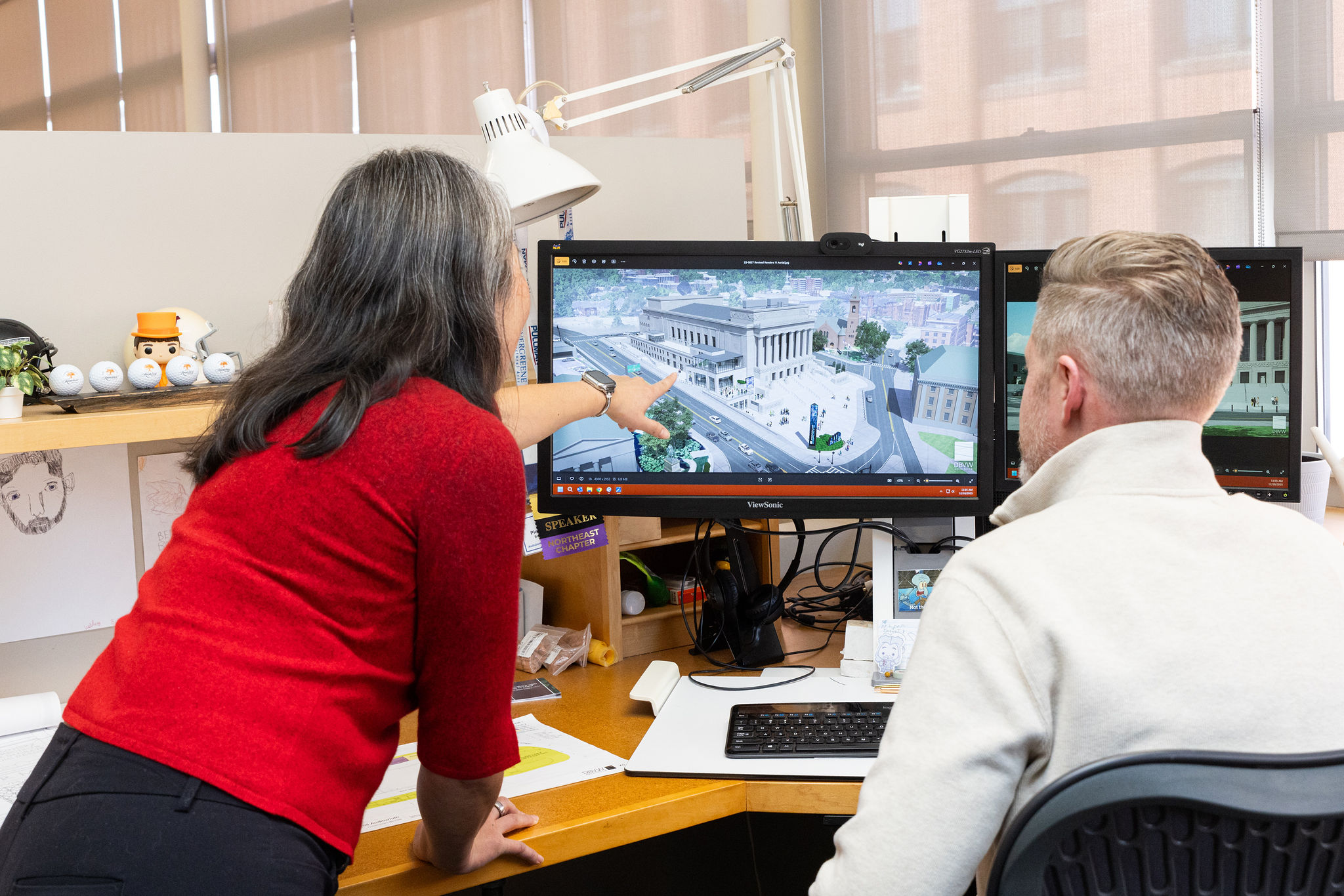
Photo by Rue Sakayama
DxRI : What happens when a building’s inherent character seems to conflict with the client’s vision, how do you navigate that tension?
TH : That tension comes up often. For us, it’s about how we tell the story, both of the building and of the project as a whole. We try to clearly articulate what the building is asking for and why those qualities matter, then share that narrative with the client and the broader audience to see if it resonates. When the story is strong, it usually leads to buy-in. Our role is to balance respect for the building’s character with the client’s needs, while still bringing out the building’s full potential. In that sense, we’re constantly navigating how to honor multiple “main characters” in the story.
PB : I think of it a bit like dating. The most successful and enjoyable projects happen when there’s mutual respect, when clients value what we bring to the table and trust our expertise, just as we respect their goals and constraints. We’re not ideologues, and it’s never about imposing a singular vision. It’s about collaboration and finding an endpoint that everyone feels good about. That doesn’t happen every time, and that’s okay. But when it does, the process feels more fluid, more human, and ultimately leads to better work.
DxRI : What recent projects are you most excited about, and which have felt especially meaningful in terms of collaboration and shared vision?
PB : We’re deeply invested in a range of community-focused housing projects, including a long-running effort in Providence’s West End that spans 19 buildings. The work involves restoring historic Second Empire style structures while introducing new construction, preserving architectural heritage while directly addressing the urgent need for affordable housing. Projects like this feel especially meaningful because they serve both place and people; honoring the past while meeting a critical community need.
I’m also particularly energized by our work with religious and community organizations. We’ve partnered with synagogues, Christian Science congregations, and several community parishes across the state. One project nearing completion in Newport’s Fifth Ward stands out: a multigenerational parish that remains one of the last true gathering places in its neighborhood. These projects are often fueled by grassroots fundraising and deep personal investment, and that shared sense of purpose creates an incredibly rewarding collaborative environment. There’s a genuine joy and commitment that makes the work feel impactful and deeply human.
TH : The projects that resonate most for me are those led by clients with an intense passion for their mission. Two recent theater projects immediately come to mind. In both cases, the clients are not only committed to the buildings themselves, but to what those spaces mean for their communities, bringing arts, culture, and shared experiences into places that need them.
Theater projects are especially complex, often relying on a patchwork of federal, state, and private funding, which makes the process challenging. But when clients are deeply invested, believing in the location, the cultural impact, and the long-term value of the work, that energy carries the project forward. Those collaborations are incredibly fulfilling, both creatively and personally, and they’re the ones our team feels most proud to be part of.
DxRI : Can you tell us about one of the theaters and share why it’s your favorite?
TH : The Worcester Memorial Auditorium is absolutely my favorite project. It’s a massive 1930s building originally constructed as a World War I memorial, and the sheer scale and ambition of it still feels astonishing. The building has been vacant since the late 1990’s, and the developers’ commitment to seeing this project through is inspiring, it’s such a huge undertaking that there are moments when it feels almost unbelievable, but the building deserves new life. It’s monumental, deeply symbolic, and honestly, it has to happen.
PB : It was a WPA-era project, and you can feel that history everywhere, from the Art Deco murals to the craftsmanship and detailing that would be nearly impossible to replicate today. Both inside and out, the building has an incredible presence: ornate light fixtures, painted ceilings, sculptural stonework, zodiac medallions, and doors adorned with symbolic motifs. There’s a richness and intentionality in every surface. It’s not just a theater; it’s a civic monument, and working on a building with that level of artistry and cultural weight is extraordinarily meaningful.
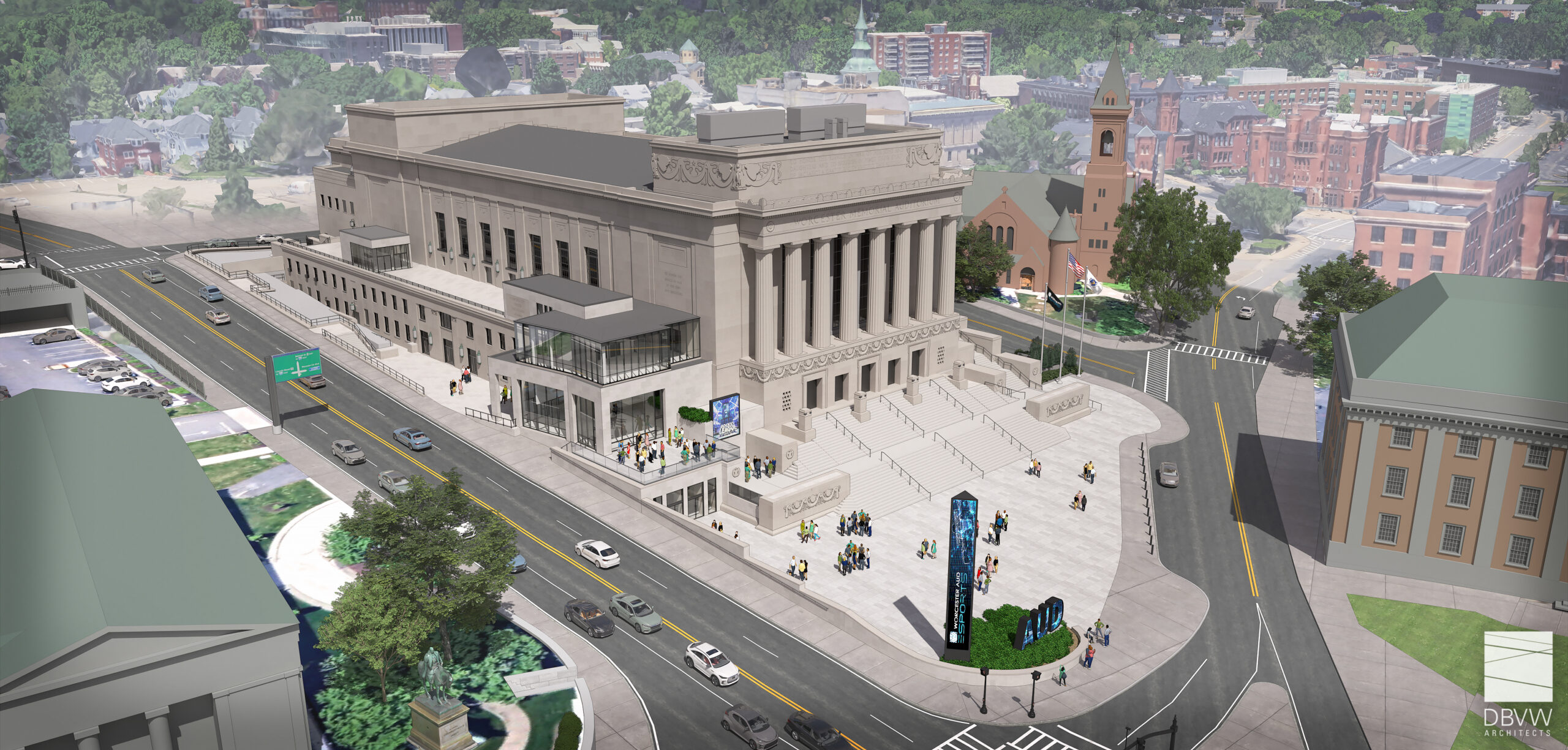
Worcester Memorial Auditorium Rendering; courtesy DBVW
DxRI : So it’s a really big preservation project?
TH : This project is an incredible preservation effort. One of the highlights is the original Kimball pipe organ – it still works! Every corner of the building, from the ornate grills to the grand lobby, is full of historic character that we’re thrilled to restore.
We’re bringing the building back to its original glory while updating it for modern use, including accessibility, mechanical systems, and code compliance. The steep site and multiple levels make this a complex challenge, but we’re designing a new, code-compliant entryway that honors the building’s history. It’s a massive undertaking, but one that will breathe new life into this remarkable space.
DxRI : How do you balance making historic buildings ADA compliant and functional while preserving their original aesthetic and architectural beauty?
PB: One of the things we always keep in mind is that accessibility shouldn’t make anyone feel like a second-class visitor. The easy, but lazy, solution is often to tuck accessible routes or entrances to the back, but we want everyone to have the same full experience.
TH : In this view, you can see that we’re preserving the existing structure while making key interventions. The goal is to introduce these additions thoughtfully, respecting the original architecture while updating the building to today’s standards.
DxRI : I’ve noticed that many older buildings have modern glass additions, often for elevators or ADA compliance. Is there a reason these updates are usually kept in a contemporary style rather than matching the original decorative elements? Is that intentional, or is it more about cost or practicality?
TH : Often, preservationists actually want the distinction to be clearly visible. They don’t want new work to exactly mimic the old, because it’s important for people to see what’s original versus what’s been added. That makes it tricky, our instinct might be to match everything, but instead, we need anyone looking at the building to recognize what’s historic and what’s new.
PB : We take that guidance seriously on all projects, but it’s especially critical when pursuing federal tax credits, which require adherence to the Secretary of the Interior standards. Those standards forbid creating a false sense of history, though there’s a lot of gray area in interpretation. A simple “glass box” addition is often the easiest solution, but it can feel lazy. On this project, we worked to balance old and new thoughtfully. By using frit patterns, shading devices, and subtle material choices, the addition is clearly contemporary, but it also connects harmoniously with the historic building.
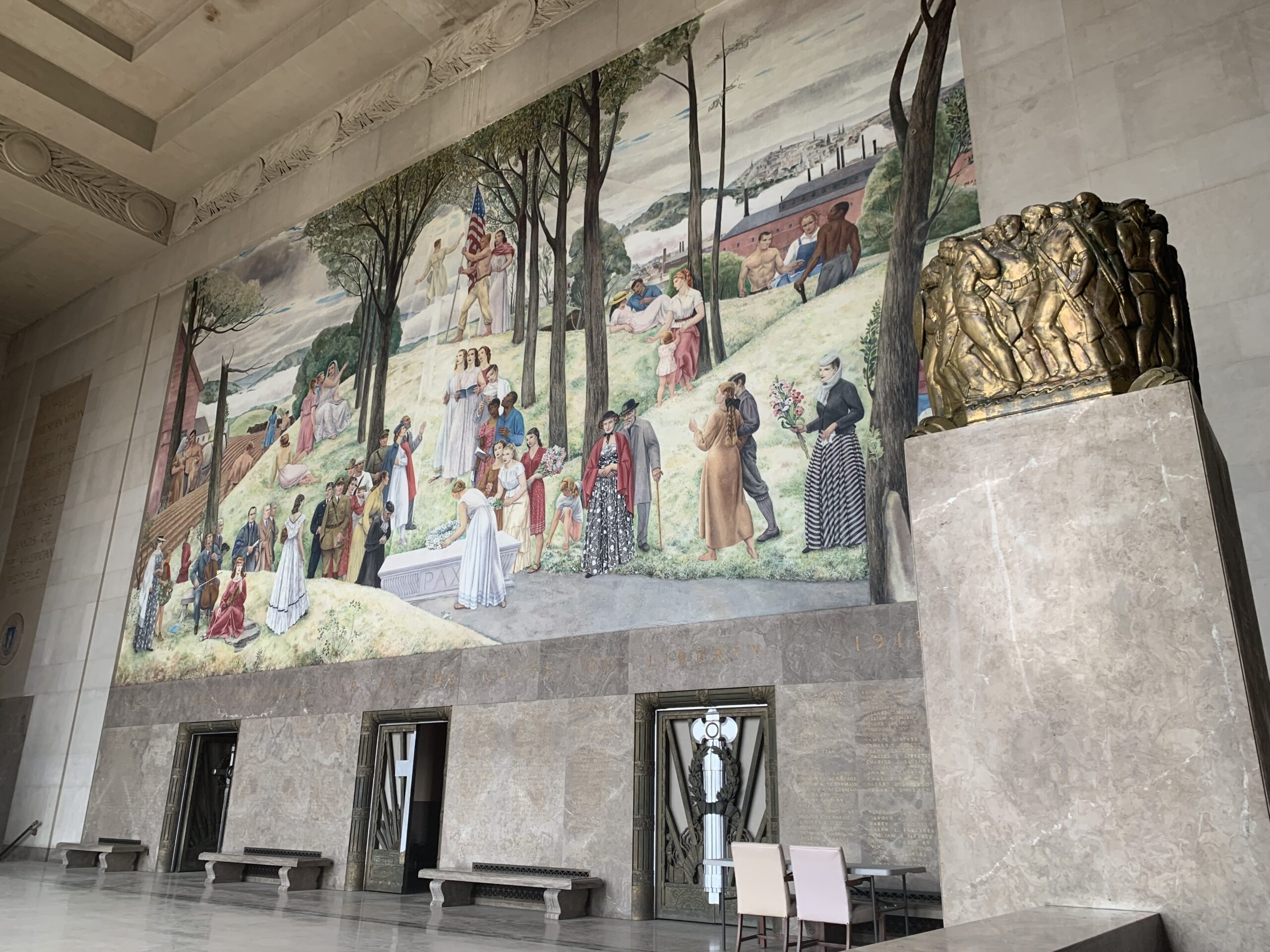
Worcester Memorial Auditorium, Lobby Mural; photo courtesy DBVW
DxRI : How do you honor and incorporate the building’s original decorative elements into your designs?
TH : On the exterior, the building has original engravings on each side. Because part of one side will be covered by the new addition, we’re proposing to relocate select lettering to the front of the building, essentially preserving a memory of what was there while keeping the historic character intact.
Inside, we’re aiming to preserve as much original decorative detail as possible while meeting current code requirements. For example, we’ll retain features like the chair rails in the hallways we’re modifying. Some elements, like the main memorial lobby’s handrails, don’t meet modern code, so we’ll be seeking variances to keep them in place without damaging the original stonework. Throughout the building, there are countless instances like this where we have to carefully balance preservation, functionality, and safety, cataloging each feature to determine whether to modify, preserve, or request an exception.
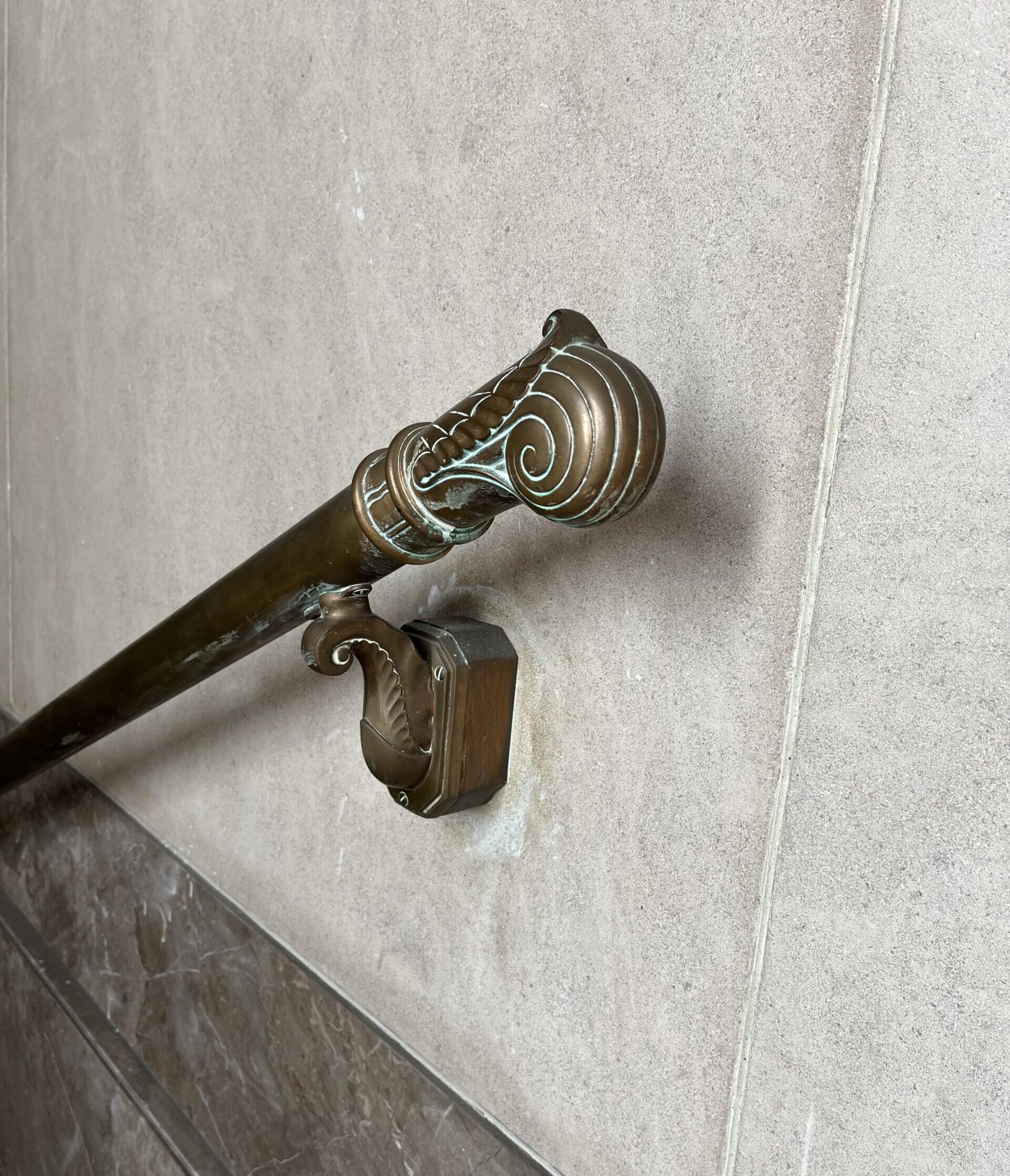
Worcester Memorial Auditorium, Handrail Detail; photo courtesy DBVW
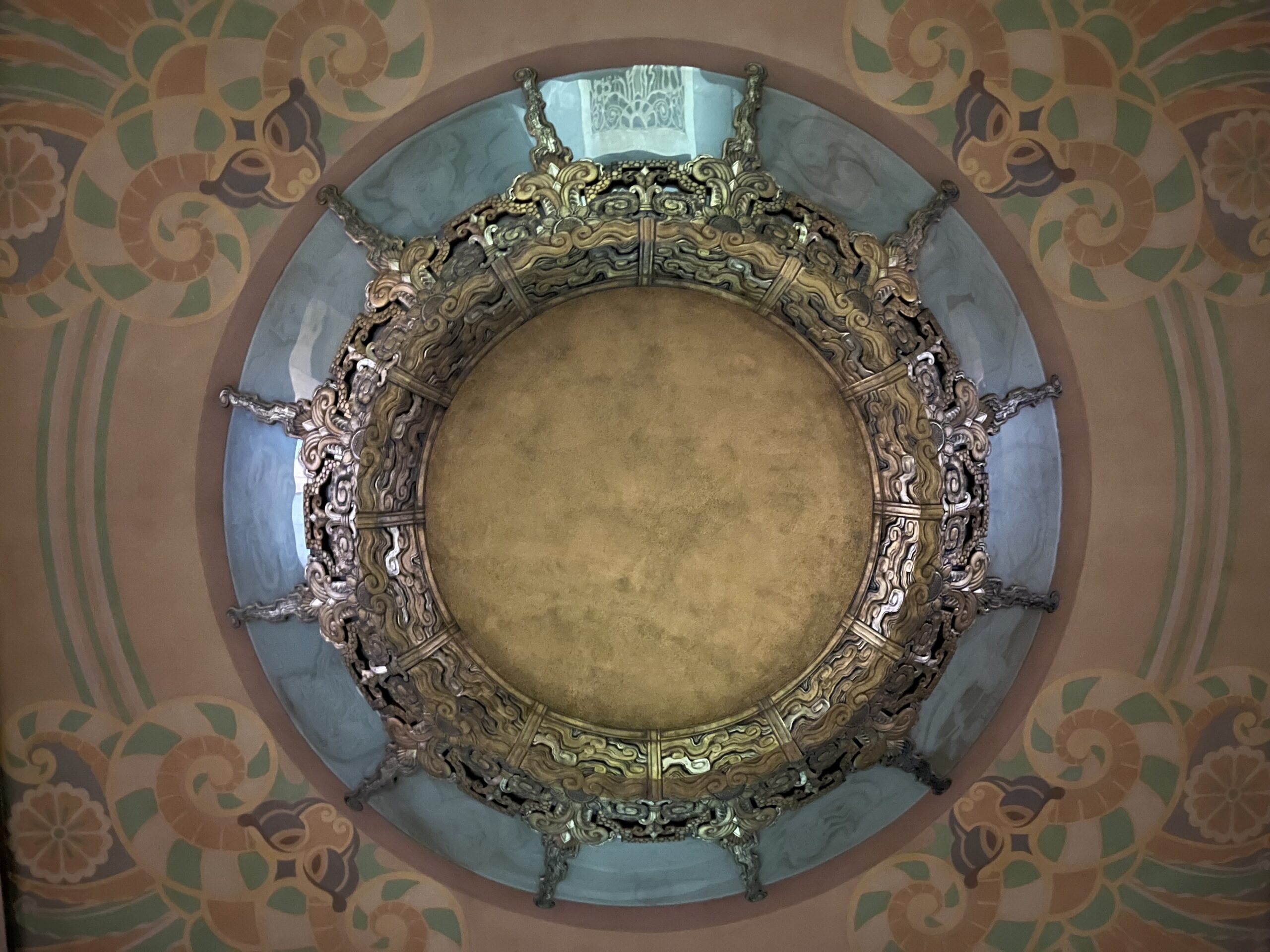
Worcester Memorial Auditorium, Ceiling Detail; photo courtesy DBVW
DxRI : It’s interesting – this conversation just made me realize that the people who write building codes and set accessibility or safety standards are, in a way, shaping how architectural history will be preserved and remembered.
TH: Absolutely. It definitely changes what we’re able to do with a building.
PB: I hear you. Even so, as citizens, we can still roughly date buildings from the last fifty years, McMansions, postmodernism, international style, revival styles. There’s a common thread, even if quality is subjective. That said, most new construction today, big-box stores, data centers, “butler buildings,” is designed to last only 15 years, often with corrugated metal and light steel framing. These structures are technically historic in our lifetimes but poorly built, not energy efficient, and not aesthetically compelling. Some people are exploring ways to reuse them, both for sustainability and to preserve embodied energy, but it’s challenging. How do we value a building like an old Christmas tree shop or a defunct Walmart? They’re everywhere, yet integrating them thoughtfully into our urban fabric is a real puzzle.
DxRI : We’ve touched on this a bit already, but can you speak more broadly about the union of old and new? Beyond the functional side, like respecting historic elements while adding modern interventions, what does it mean for your firm, philosophically, to blend these disparate materials, processes, and ideas into a single project?
PB : A lot of it comes back to context. Each project type requires a different approach. Even in new construction, which often happens within urban or suburban settings, we feel a responsibility to respond to the surrounding environment. For example, our new residential treatment center in Exeter and a fire station in North Kingstown are designed with a very New England style, even though they’re independent sites.
At the same time, adaptive reuse projects, like mill renovations, push us in other directions. Sometimes we emphasize the industrial aesthetic; other times, we create a deliberate juxtaposition between historic elements and modern interventions. Our goal is always to celebrate the building’s story while introducing contemporary design elements.
TH : One project we worked on in the Berkshires was a paper mill with seven additions over the past century. Each section used different construction materials and methods, creating a complex, layered building. It was challenging, but also rewarding, to integrate these disparate parts into a cohesive design without erasing the building’s history.
PB : It’s similar to South Street Landing, where expansions were added ad hoc over time. To the casual observer, it looks homogeneous, but the building is really a “Frankenstein” of incremental modifications. Our goal is to respect and reveal that history, making it part of the design narrative rather than covering it up.
TH: And structurally, it’s always a collaboration with engineers to manage these variations safely while honoring the original architecture.
PB: We see this concept across many projects. At Moses Brown, for example, we designed a new performing arts center that fit stylistically within its context, alongside a library adaptive reuse project, different approaches, but both guided by the same principle of blending old and new thoughtfully.
TH: Similarly, at the Johnson & Wales PA building, which was formerly a jewelry manufacturer’s facility, we repurposed it for modern use while respecting its historic character. It’s always about balancing respect for history with today’s standards and needs.
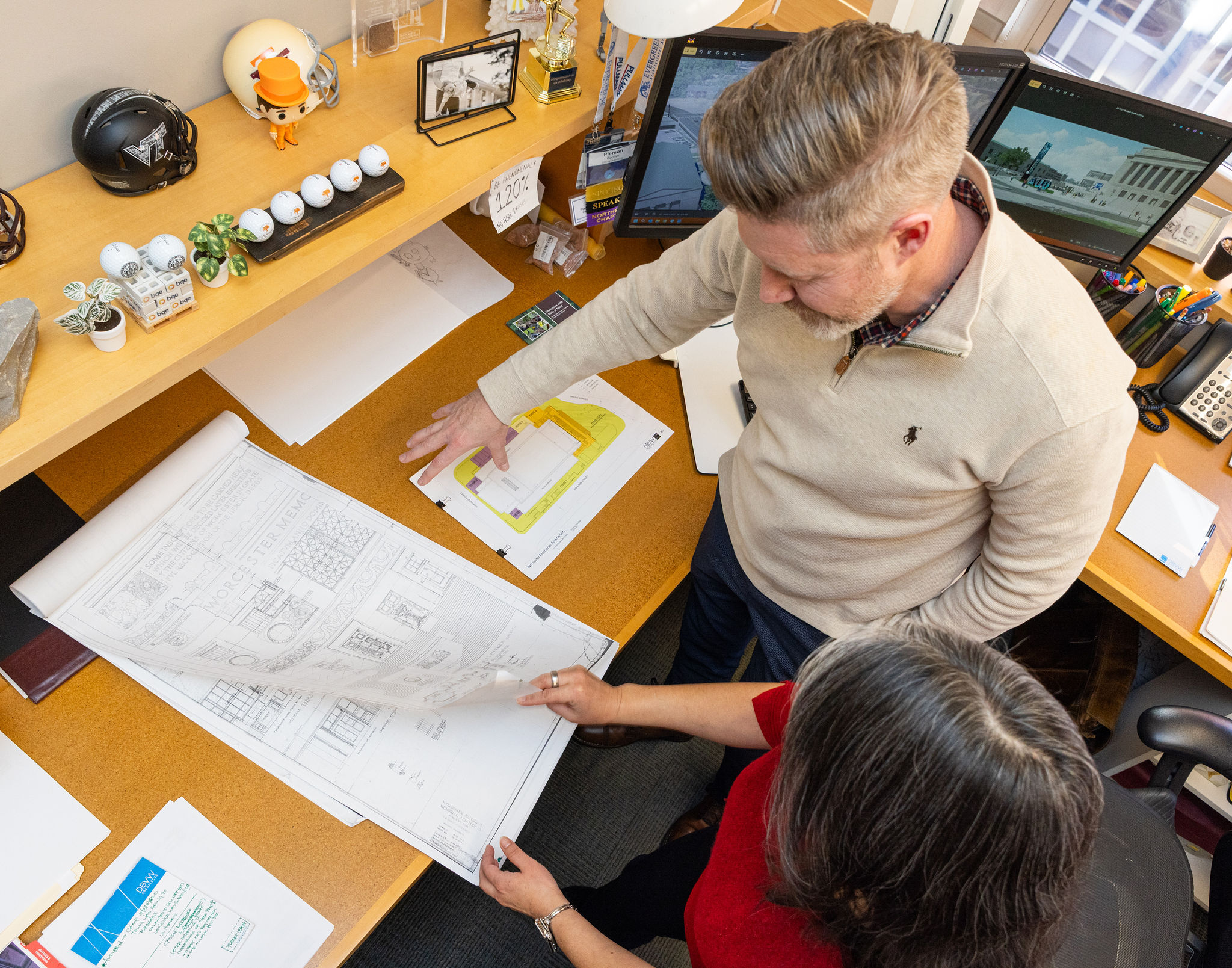
Photo by Rue Sakayama
DxRI : I’m curious, do forensic architects exist, or are all architects inherently forensic in nature? Thinking about South Street Landing, you described the process of “excavating” a building and discovering that reality isn’t always as it appears, layers of time and intervention are hidden beneath finishes like sheetrock, wallpaper, and paint. How do you approach this kind of architectural investigation in your work?
PB : Absolutely. My master’s degree is in historic preservation, and one of my professors, John Milner, a well-known preservation architect, taught a class called Building Forensics. We worked on an 18th-century home, selectively deconstructing parts of the building to date modifications. By examining the size of the lumber, the tools used, and even the nails, we built a chronology of the building’s evolution. From there, we researched why these changes happened, which directly informed the design decisions we made.
This approach is central to how our firm operates. Over the past decade, we’ve cultivated a team of nine preservation specialists who document and analyze existing buildings thoroughly. We aim to understand how structures evolve over time, not just through surface-level research, so that this knowledge becomes an integral part of every project, rather than just a presentation detail.
DxRI : Do you think that’s something that sets this firm apart from others?
PB : Yes, we do think it sets us apart. It’s not an add-on service, it’s central to who we are. Our 37-person team integrates these specializations directly into our pedagogy and design approach. Some firms provide full-service architecture and engineering under one roof, others operate as boutique firms and hire external specialists. We position ourselves in the middle: leveraging our internal expertise while selectively bringing in collaborators, which allows us to maintain a deep, consistent understanding of each project while highlighting our core strengths.
DxRI : It’s fascinating to hear how your appreciation for history informs your work, and how you blend that historical understanding into creating beautiful, functional spaces.
TH : Absolutely. Ultimately, our goal is to bring a space back to life in a way that everyone can experience and enjoy it.