
- Home
- /
- The DxRI Dispatch
- /
- Interviews
- /
- Beyond the Object: How...
Beyond the Object: How Design Shapes Everything at Myrth
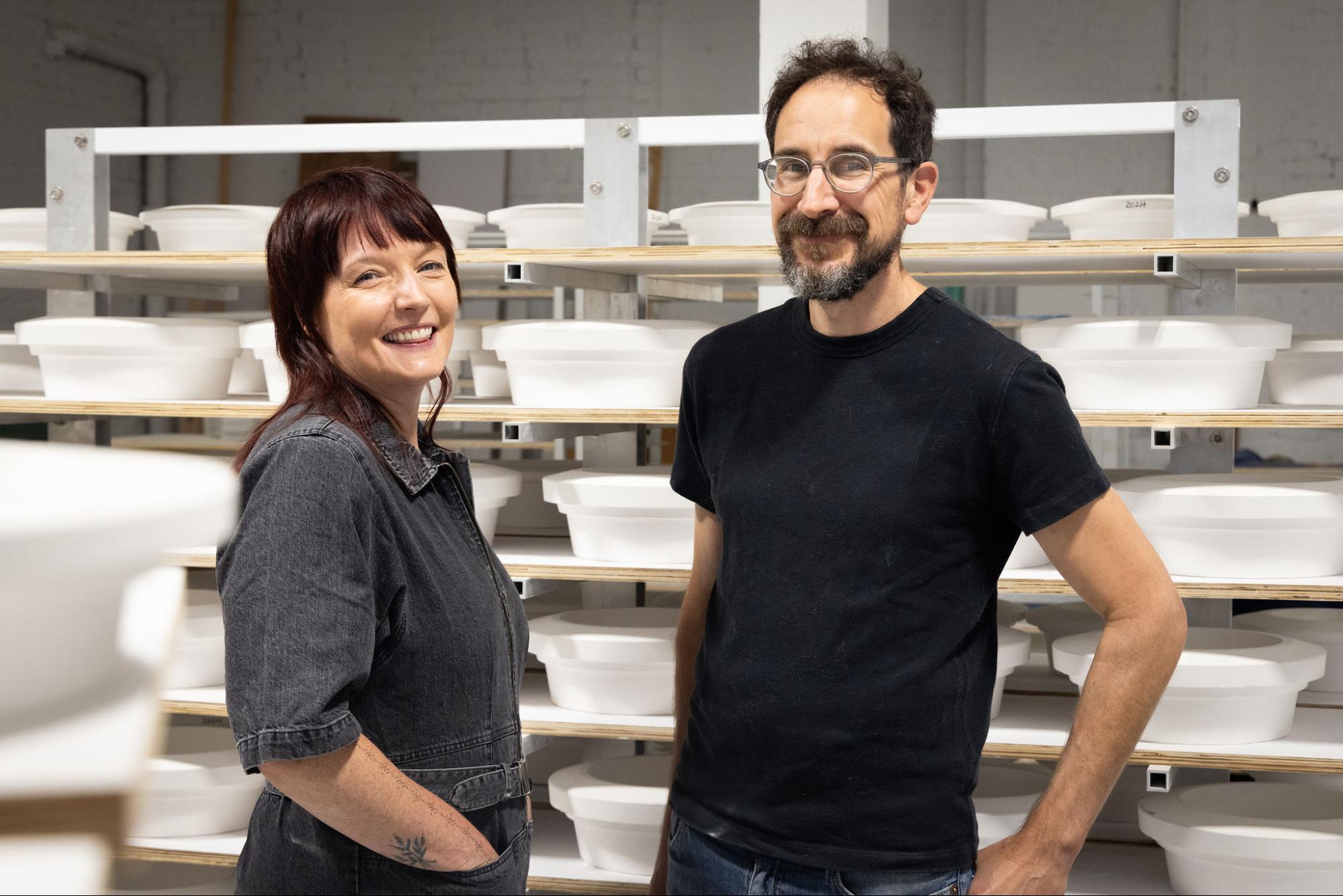
Photo by Rue Sakayama
At Myrth, the Providence-based porcelain tableware studio founded by product designers Abby and Eric Smallwood, design extends far beyond the finished piece. From developing their own porcelain recipe and engineering custom machinery to refining every curve, glaze, and production step, the duo brings a product designer’s mindset to every aspect of their business. In this conversation, they share how experimentation, problem-solving, and a commitment to continuous improvement have shaped Myrth’s approach to manufacturing, and how they’re building connections with the chefs, restaurants, and hospitality professionals who use their work every day.
+++
DxRI : You both came to ceramics through careers in product design, rather than as traditional ceramicists. How has that background shaped your approach to making porcelain tableware?
Abby Smallwood : We started the business 11 years ago, initially hand-throwing everything, which was incredibly labor-intensive. With our backgrounds in manufacturing, we knew there had to be a better way. One of our first steps was to design and build our own tools, including a custom jigger system and the tooling and blades to work with the plaster molds we developed.
Using Eric’s engineering skills and our combined design experience, we’ve rethought every step of the manufacturing process. Each time we redesign part of it, we see improvements in product quality, efficiency, and production capacity. We’re also conscious of waste, so we look for ways to repurpose equipment rather than simply buying new. That mindset of continually refining and improving guides everything we do.
DxRI : Can you talk about the intersection of design and manufacturing at Myrth, particularly how the manufacturing process informs the way you design a product?
Eric Smallwood : Before joining Myrth, I designed products up to the point of manufacturing, then handed them off to a client to figure out how to produce them. At Myrth, I’m responsible for both sides of that process. We can move quickly from developing a new bowl or plate shape to figuring out how to manufacture it efficiently and consistently.
That design thinking extends beyond the products themselves. I also design components for our processes and machines to make them work better. We’ve built custom storage carts for our plaster molds, as well as jigs for trimming and glazing. Design is woven into just about everything we do here.
AS : I always hesitate when someone calls us potters or ceramicists, because those terms don’t really capture what we do. We’re designers. Right now, we’re designing in ceramic, but we may work in other materials, too – wood is already beginning to enter our product portfolio.
To me, design is fundamentally about problem-solving and creating solutions. We’re a bit like mechanics: we love tinkering, fixing things, and finding ways to make them better. I don’t think that work will ever really be finished, and that’s part of the joy of it.
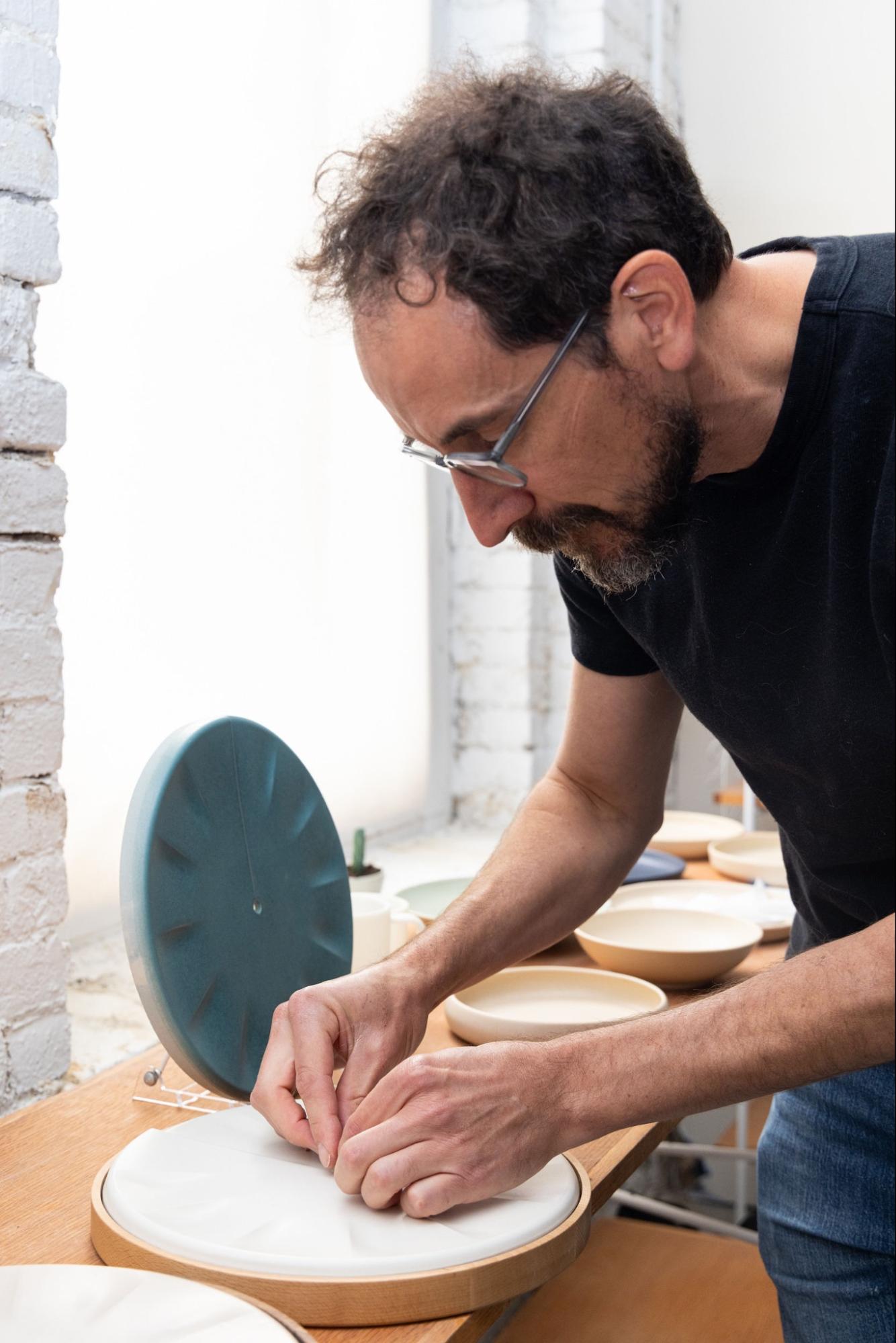
Photo by Rue Sakayama
DxRI : How do you define your roles within the business?
ES : In a team this small, our roles are fluid. We each take on different parts of the business, leaning into what we naturally do best. The biggest area of overlap is production, where we work together to make the pieces.
AS : I think of our roles as a spectrum, from engineering to marketing, with product design in the middle. Eric gravitates toward engineering, while I focus more on marketing and sales. Product design brings us together, and we both move across that spectrum as needed. As entrepreneurs, we have to wear a lot of different hats. It all comes back to figuring things out, solving problems, and finding solutions.
DxRI : How did you develop your porcelain recipe?
AS : Developing our porcelain recipe has been a bit of a science project. We started with our own knowledge and brought in industry experts when we needed additional help. We’re fortunate to have a strong network of people to turn to. The recipe is our secret sauce!
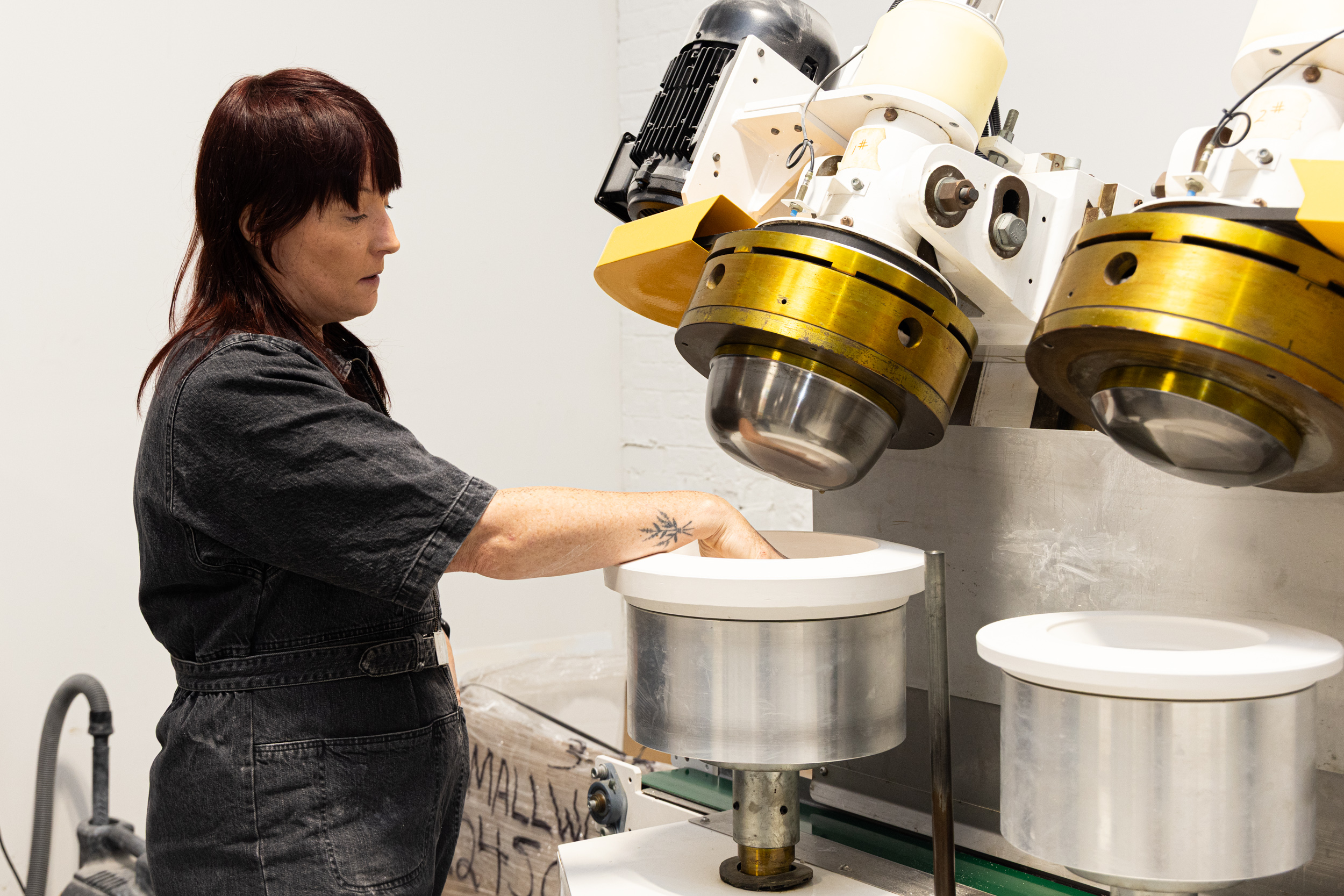
Photo by Rue Sakayama
DxRI : Can you tell us about this interesting-looking machine?
AS : We use several production methods, including slip casting, spinning clay into molds, and jiggering.
ES : This is a roller jigger, which is faster and more powerful than our other jiggers. We designed a new set of molds specifically for this machine. It rolls and compresses the clay, removing excess material to create a denser, more resilient piece.
AS : That compression also helps align the clay particles, almost like tightly stacked playing cards. That structure gives the porcelain greater strength and durability. It’s a fascinating process, and it’s more efficient, too.
DxRI : How does the equipment influence your production capacity?
ES : We’re constantly looking for ways to improve production, and much of that comes down to the number of molds we have. So having more molds would let us run larger daily batches, work more efficiently, and maintain consistent quality.
DxRI : What are changes you’re considering for the production workflow?
ES : We’re planning to move more products away from slip casting and onto the roller jigger. Slip casting involves pouring liquid clay into plaster molds, then removing, cleaning, and finishing each piece. It gives us flexibility to experiment with forms, for example, turning a cup into a ramekin or adapting a vase into a carafe, but it’s labor-intensive, and our molds are reaching the end of their useful life.
Moving our mugs and small cups to the roller jigger should improve consistency and reduce finishing work. We’ll still use slip casting for some components, such as handles, but shifting more of our production to mechanical processes will help us improve both quality and efficiency.
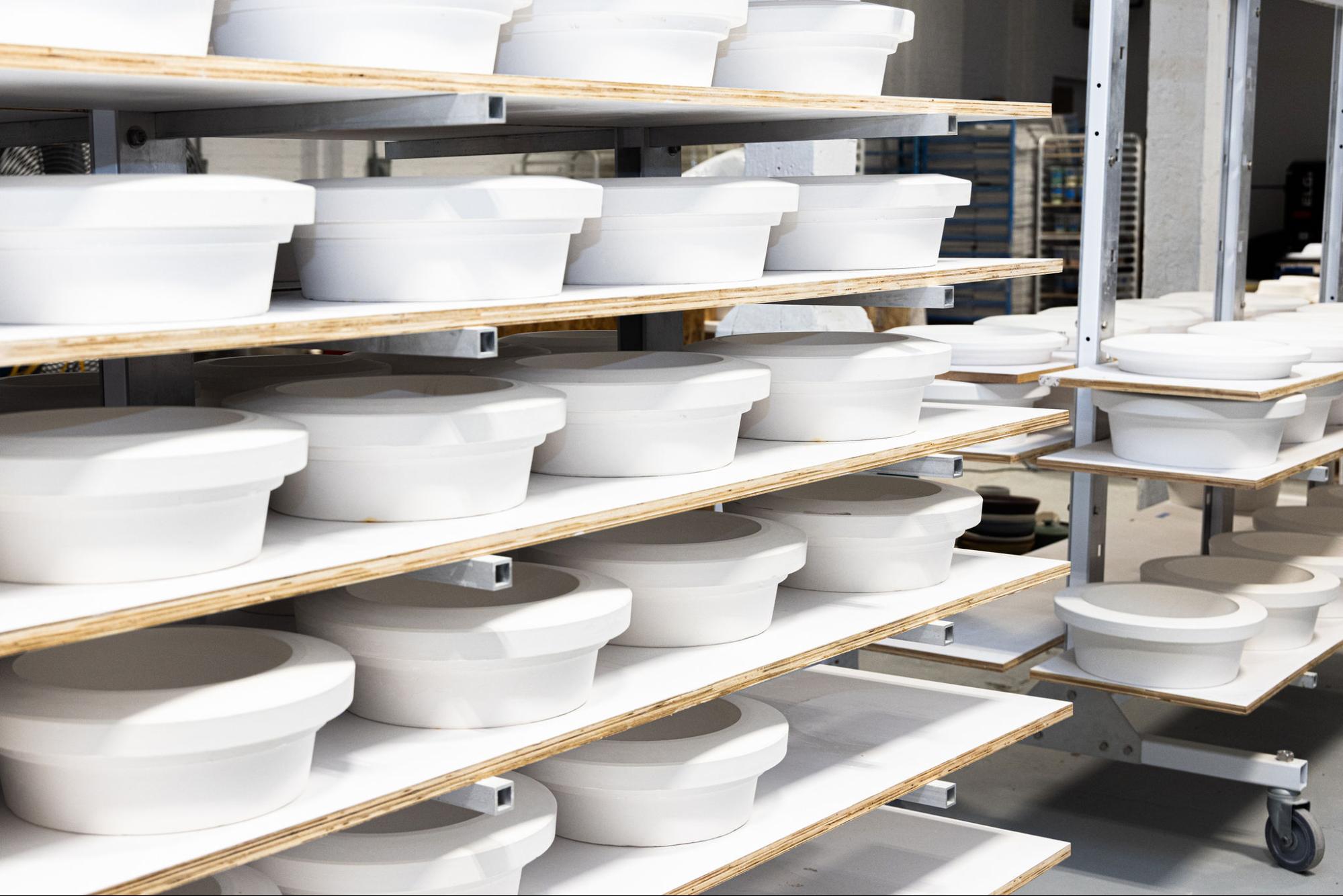
Photo by Rue Sakayama
DxRI : The engineering behind each step is remarkable, especially when the finished product looks so effortless.
AS : That’s the difference between manufacturing and making one-off pieces. Before we produce anything, there’s a lot of design work: developing forms digitally, prototyping, and building the molds and tooling. It’s a collaborative process, with both of us refining every detail, sometimes down to the millimeter.
We’ll often 3D-print prototypes to test subtle changes in shape, curves, and proportions. Those details matter not only aesthetically, but also for practical considerations like how well pieces stack and function in a restaurant setting.
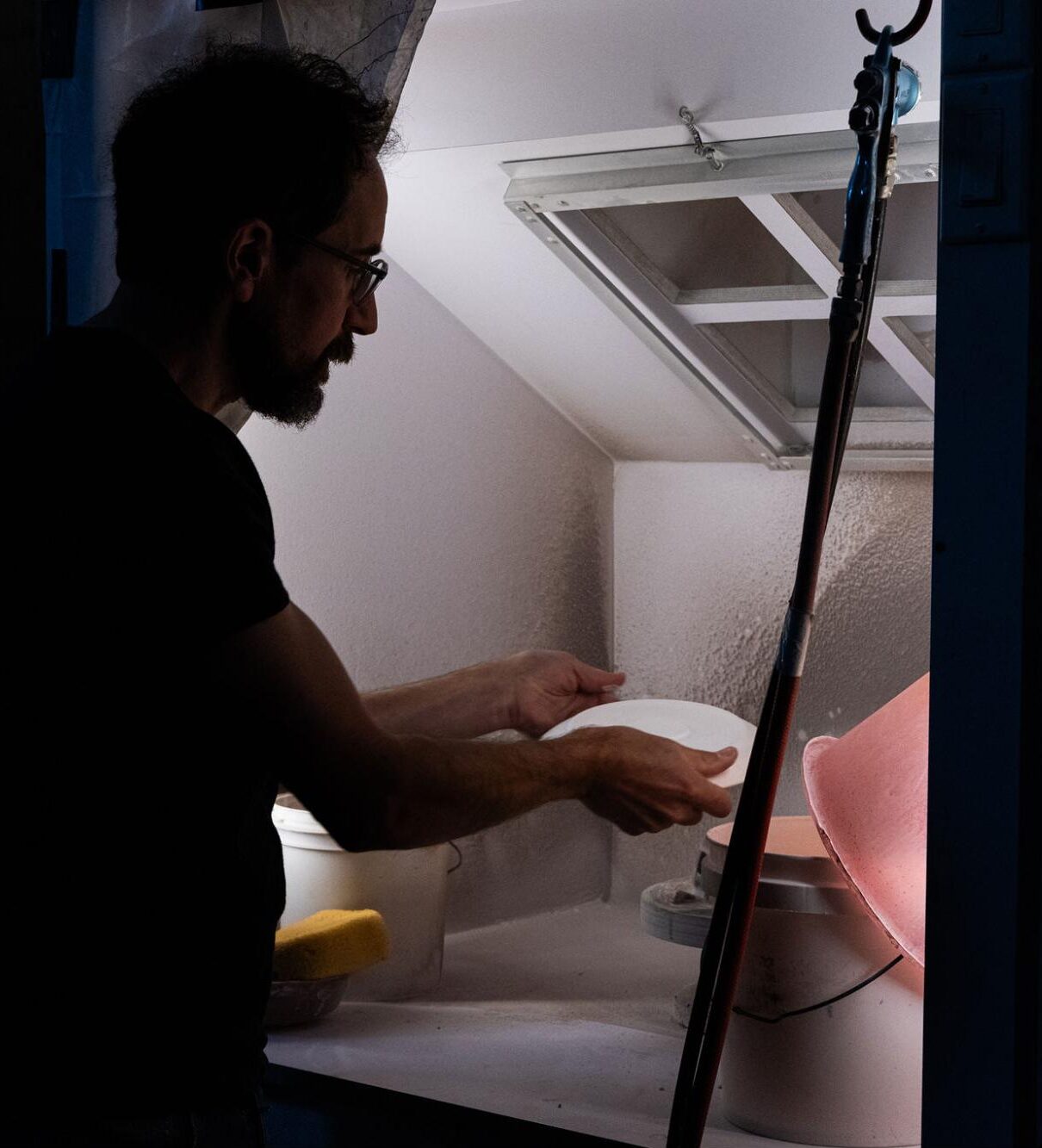
Photo by Rue Sakayama
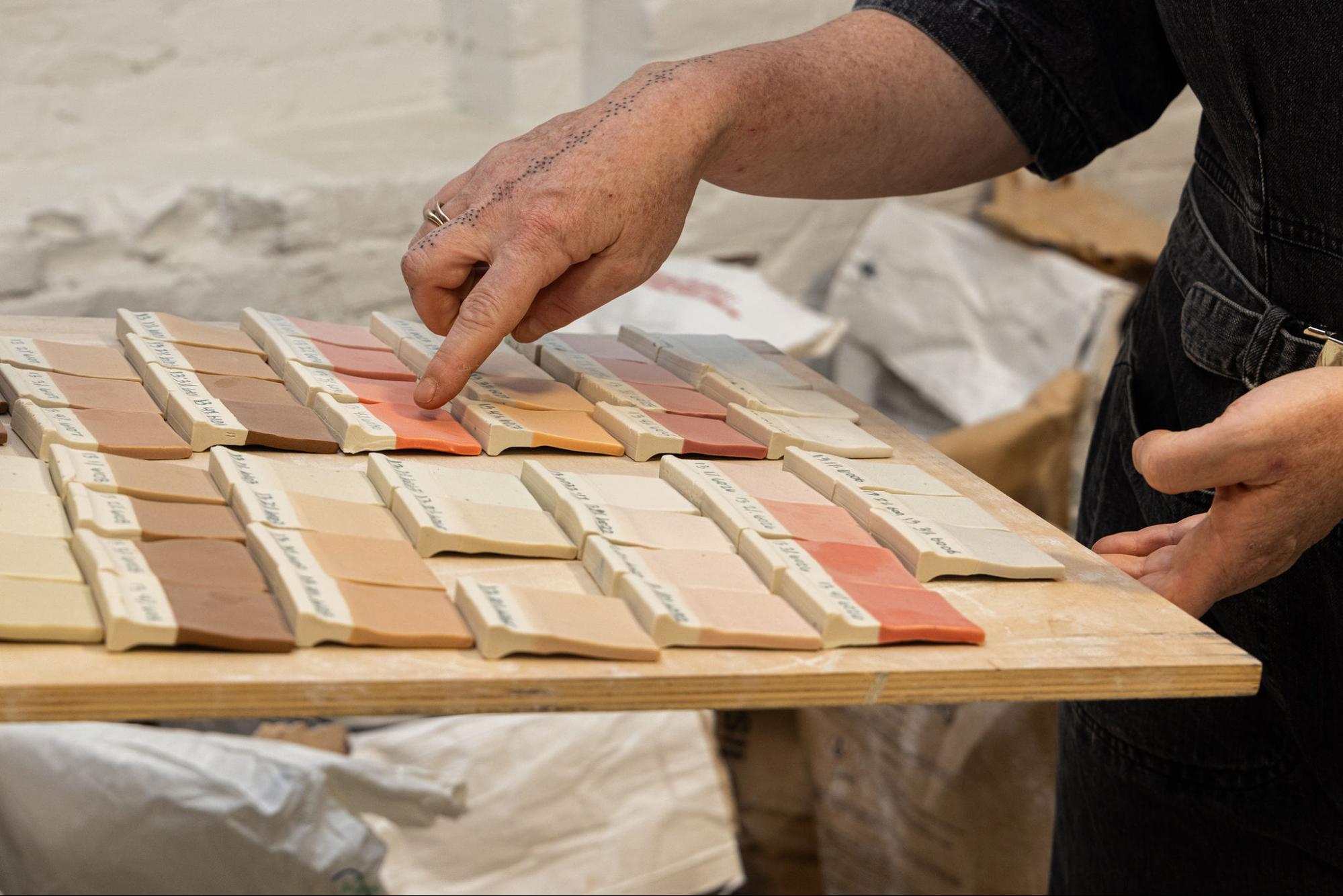
Photo by Rue Sakayama
DxRI : Glazing seems to require a level of precision that’s easy to overlook. What does that final step involve?
ES : Glazing is highly technical and hands-on. We spray each piece individually, weighing the glaze to ensure we apply just the right amount. Even a few grams can make the difference between a beautiful finish and a flawed one.
Pieces that don’t meet our standards become seconds, which we sell at a lower price. It’s a great way for customers to discover Myrth and bring our work into their homes, even if a piece isn’t quite perfect.
DxRI : Will you have seconds available for purchase during Open Studios in November?
ES : Definitely! We usually have seconds available, though we recently held a big online sale, so our inventory is a little lower right now. The good news is that our production improvements have significantly reduced the number of seconds we produce, from around 15% to about 6%. We’re making better-quality pieces and wasting less, which is great, but there should still be some seconds available to shop during Open Studios.
DxRI : You recently attended the LA Chef Conference. How did it go?
AS : It was fantastic. We were invited to sponsor the event, which brings together around 900 people from across the culinary and hospitality industries. We were the exclusive tableware sponsor, surrounded mostly by food, beverage, and restaurant-service brands. It was a great opportunity to introduce Myrth to some of the industry’s leading chefs and restaurant designers.
We met the conference founder at a trade show in Chicago, and he became a real champion of our work. He went out of his way to introduce us to people and even gave us a chance to speak to the audience. What stood out most was how welcoming the community was. We met some incredible people, made unexpected connections, and came away excited about the potential for new partnerships.
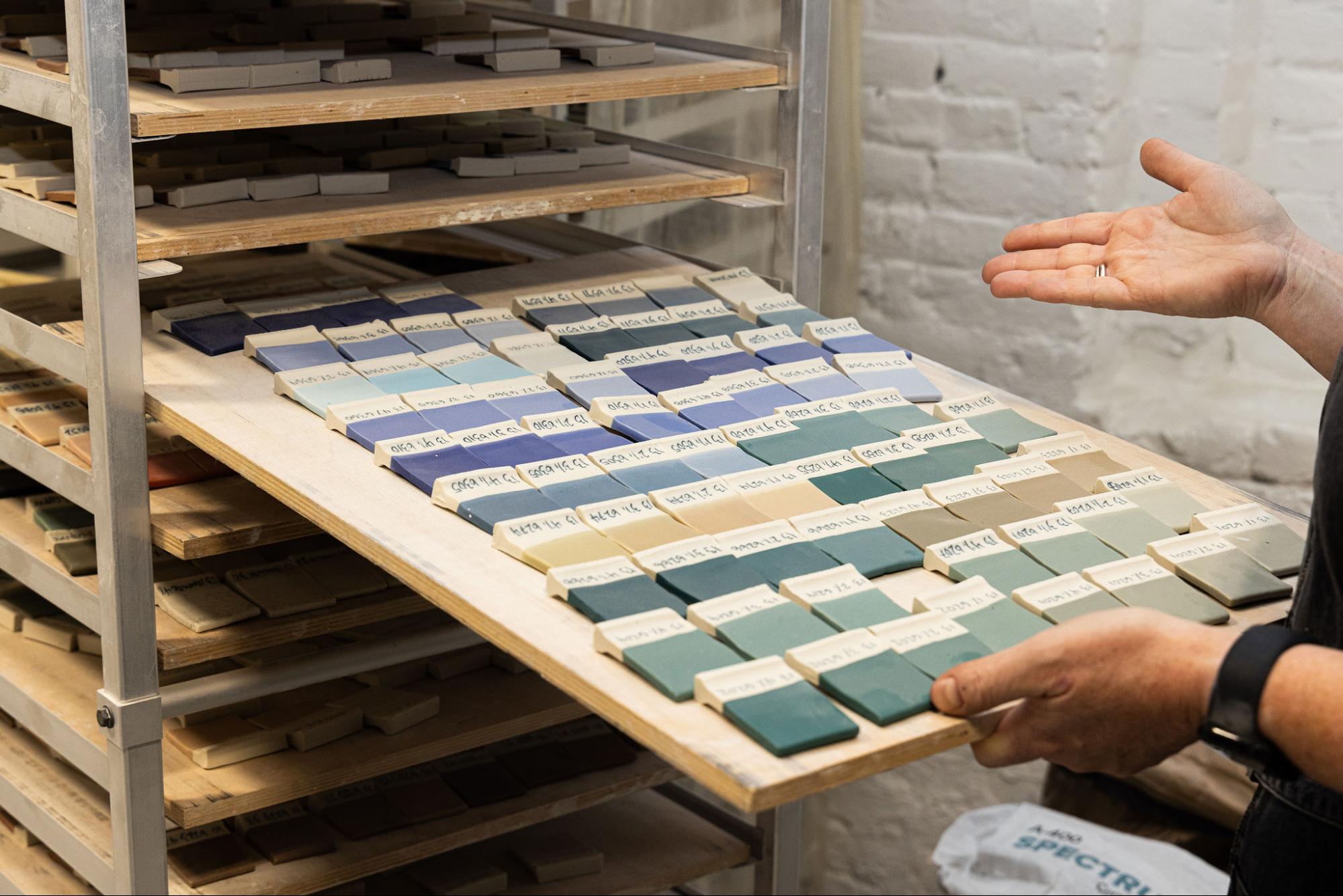
Photo by Rue Sakayama